
Turn your quiet talent into visible high performers.
I help your early-career professionals to contribute at their full capacity and take ownership of their development.
Your early-career talent is underutilised
You have invested heavily in recruiting strong early-career talent. Yet many of them:
Hesitate to speak up or ask questions in meetings
Overcommit to maintain a positive image
Wait to be “ready” and overthink before acting
Lack clarity when it comes to self-progressionn
The result?
Under-recognised talent
Increased burnout risk
Disengagement
No ownership of personal and professional development
What this means for your organisation:
Slower development and overprotection of young professionals
Increased pressure on seniors
Reduced (diversity in) leadership pipelines
It’s not a skills gap. It’s a visibility gap.
Why conventional programs aren’t enough
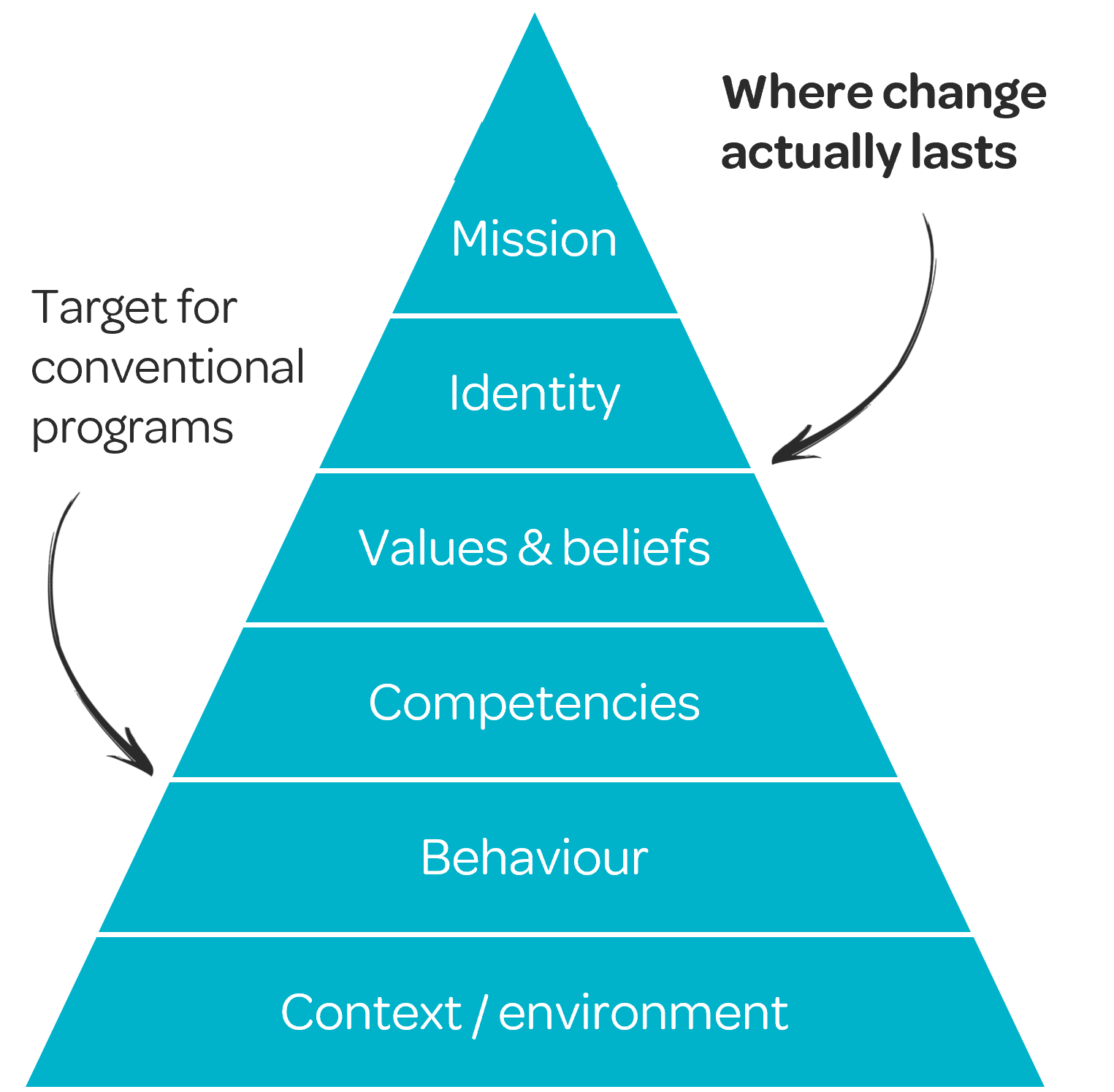
Most development programs focus on skills and knowledge transfer. These programs assume that if people know what to do, they will naturally do it.
But your professionals already know they should take ownership of their development and speak up in meetings. They want to. But as long as their limiting beliefs remain unchallenged, behavioural change does not stick.
“I’m not experienced enough to speak up yet.”
“If I say no, people will think I’m incapable.”
“I should figure it out myself.”
“If I work hard, my work will speak for itself.
Lasting development happens on a deeper level: at the level of beliefs, internal narratives and identity.
That is where Little Ripple Coaching works.
You only need a Little Ripple
The Splash program helps young professionals to trust themselves enough to:
Move from rumination and preparation to action
Speak up before they feel “ready”
Communicate with clarity under pressure
Navigate uncertainty and self-doubt
Proactively step outside their comfort zone
Through the program, Little Ripple Coaching creates small but powerful shifts in how your early-career talent thinks about themselves and their role.
Confidence grows through action.
Visibility increases.
The outcome?
More engaged, visible and proactive team members.
Participants have experienced first-hand that their self-doubt is not in control. They have increased self-awareness and self-compassion and know that true growth does not occur without some initial discomfort.
The benefit for your ogranisation:
Visible high-performers inspire and lift up the rest of the cohort
Retention of your future leaders
Your ambassadors attract other high-potentials
Accelerated readiness for client-facing roles.
Seniors can delegate more challenging tasks and get freed up to focus on high impact interactions
The participants set an example for the rest of the cohort.
The ripple spreads.
What you’ll see after the program
Did you know? High performers are 400%-800% more productive than an average employee!
For maximum impact
The program is best suited to early-career high potentials who:
Deliver strong technical work, but only share their thoughts when explicitly asked
Are seen as reliable, but defer (challening) opportunities to others
Are stuck in the safety of their comfort zone
Seem motivated but uncertain about their trajectory
Managers likely see some form of hesitation, and might say: “They’re capable, but a bit quiet. I’d like to see them take more ownership.” These individuals will get the most out of the program.
The program is not for:
Consistently underperforming employees
Individuals unwilling to reflect or take ownership
Employees in need of a medical professional (e.g. therapy, EAP)
Are you ready to start making ripples?