
You are more than capable.
It’s time others see it too.
Click the button to complete a
This might sound familiar
You’re a quiet technical professional wanting to grow and be taken seriously in your field of interest.
You give 110% on all your projects and complete professional trainings to improve your skills.
You’ve spent time after hours to make deadlines and to improve your technical capability, because you want to deliver your absolute best and to be recognised for your potential.
You’ve forced yourself to attend networking events to get exposure and make connections.
You’ve invested in self-help material to build more confidence, but somehow can’t seem to do and say what peers seemingly do and say effortlessly.
You’re aware of all the tricks in the book to support public speaking (pacing, pausing, posture, no filler words), but once it’s your moment to shine, overwhelm and nerves don’t give you a chance to practice any of it.
Despite continuous effort, you still don’t feel ready to show all you have to offer.
You’re secretly happy if someone else takes the lead, even though you want to be more visible.
You’re waiting for your work and dedication to speak for you, but aren’t being recognised.
You overthink, self‑critique, and hesitate before speaking up. Then you replay conversations and presentations in your head afterwards to point out all your flaws.
You’re getting frustrated because you’re done with feeling so awkward about yourself, but the strategies you’ve found only work on paper. Under pressure, in the moment, fear and self-doubt make your decisions for you.
You’re used to being able to solve the problem if you work on it hard enough, so you’re starting to feel defeated.
Is your own professional development the one problem you can’t solve?
It doesn’t have to stay that way!
Why you feel (and stay) stuck
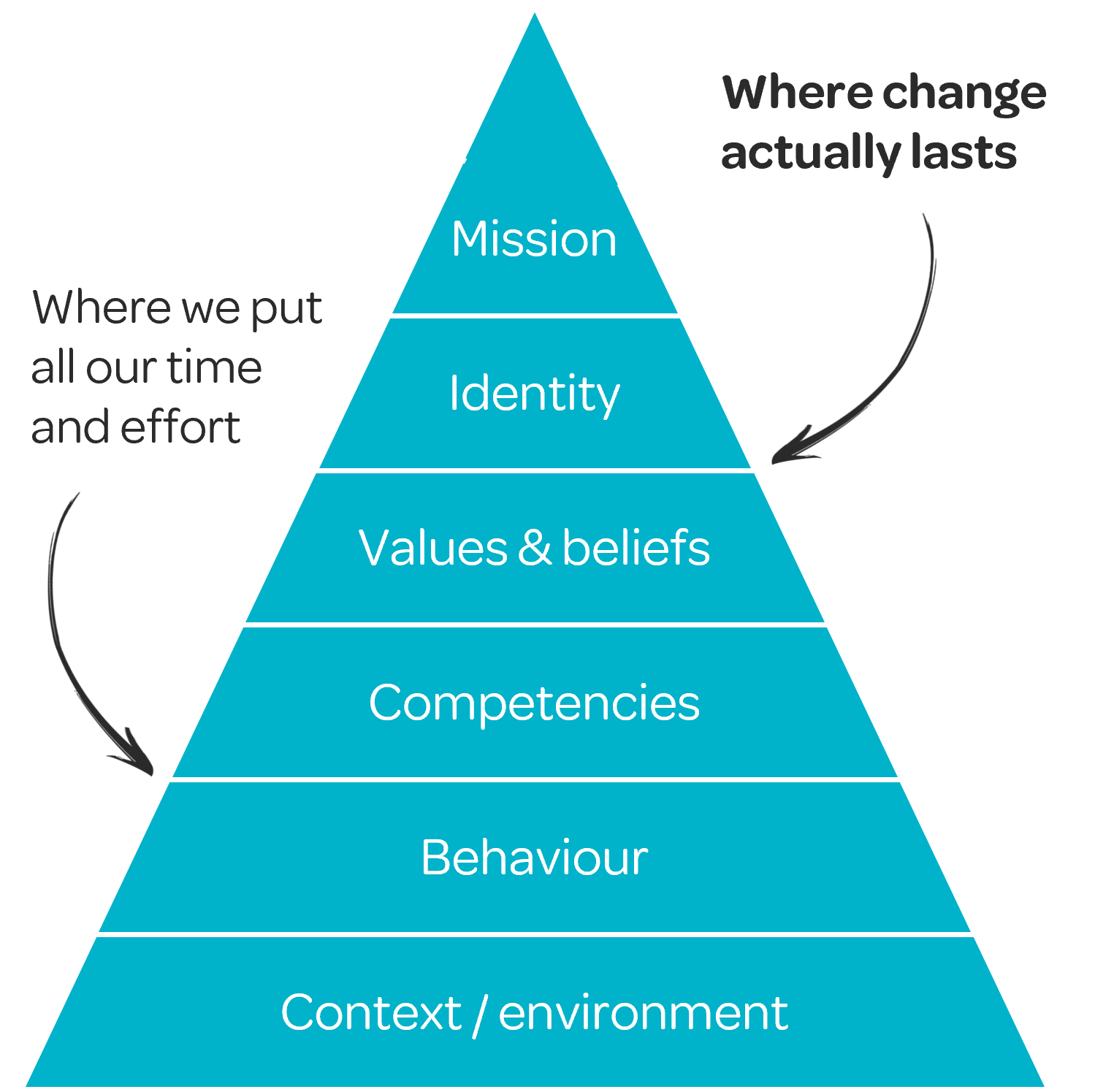
Most of us reach for the same handful of fixes: build more skills, knowledge or experience. Double down our efforts. Wait for the confidence and “feeling ready” to follow.
Sometimes that's genuinely the answer (I'm currently learning this all over again with kung fu, where practice really is most of it). But if you can’t seem to break out of fear, overthinking or self-doubt despite really trying, that’s not because you’re incapable.
“If I mess up, they’ll think I’m dumb.”
“My idea will never be the best one.”
“I should figure it out myself.”
“It needs to be perfect before I take action.”
If something like the lines above sounds familiar to you, then no amount of skills training is going to change how you actually show up. Your limiting beliefs, these invisible operating rules, are what you will default back to, especially under pressure. No matter how much you practice.
The good news: you can choose what rules you play by.
This is how, after over a decade of struggling with “best practices” and confidence tricks, I finally learned how to enjoy public speaking, despite nerves. How I slowly actually started to back myself. How I got comfortable approaching strangers at networking events. I changed my rules, and I found a way that works for me.
Ready to find out what limiting beliefs are making your decisions for you?
You only need a Little Ripple
This is where Little Ripple Coaching comes in.
Rather than trying to get rid of self-doubt, boost confidence, or “fake it till you make it”, we change how you relate to your thoughts, so they stop running your life.
Your mind will continue to create hesitation, caution, and worst‑case scenarios. That’s how a thoughtful, analytical brain works. The problem only arises when those thoughts are treated as instructions rather than information.
Through values‑based coaching, you learn how to stop debating with your mind and start choosing your actions deliberately. Instead of waiting to feel ready, you practise showing up as you are — thoughtful, introverted, and imperfect — in service of what matters to you.
This approach allows confidence to emerge as a by‑product of action, not a prerequisite for it. You don’t become louder or more extroverted. You become clearer, steadier, and more self‑directed. More yourself. How wonderful is that!
A 30-minute focus session for $47 so that you get a chance to experience the difference.
That sounds nice, but what do I actually get out of it?
In practical terms, our work together focuses on building your capacity to act when it counts. Not by forcing yourself, but by grounding your choices in your values.
You’ll learn how to:
Notice self‑doubt without getting pulled into it
Speak up even when your voice shakes
Stop over‑preparing as a way of avoiding risk.
You’ll practise setting boundaries that are calm and firm, rather than apologetic or reactive.
Over time, this shows up in very tangible ways:
You contribute more in meetings and presentations.
You advocate for yourself without over‑explaining.
You make career decisions based on meaning rather than fear.
Instead of rehearsing life in your head, you trust yourself to respond in real time.
This isn’t about becoming fearless or faking confidence. It’s about trusting yourself with uncertainty — especially in moments where you’d usually retreat
How we can work together
Coaching that develops workplace skills may be tax deductible as a self-education expense, depending on your role and exact goals. Confirm eligibility with your accountant.
Drop
$249
A deep dive suited to one specific moment or challenge
1 x 60-minute 1:1 coaching
Via Teams or in person*
Session recording and summary shared for your own reflection
Splash
$199 per session
For working through a pattern that keeps showing up
4 x 60-minute 1:1 coaching over six to ten weeks
Via Teams or in person*
Session recordings and summaries shared for your own reflection
Optional reflection exercises between sessions
2 x check-ins between sessions (email or voice note)
Ripple
$167 per session
The one most people land on when they’re ready to properly work through what’s holding them back.
6 x 60-minute 1:1 coaching over three to six months
Via Teams or in person*
Session recordings and summaries shared for your own reflection
Optional reflection exercises between sessions
4 x check-ins between sessions (email or voice note)
Personalised development plan so you can keep your momentum once the sessions are finished
*In person in Sydney and by request only.
Please note:
Coaching is not a “quick fix” or a guided tour

Coaching is not a series of meetings you can passively “attend” and then forget about until the next meeting rolls along. It involves analysis, decision making and action that starts before the first meeting and will extend beyond the last meeting. It’s a process that takes time, and like with most things in life: the more effort you put in, the more you will get out of it.
A coach is not a licensed medical professional. Therefore, I cannot help you if you are experiencing trauma, extreme stress, effects of abuse (emotional or physical), deep grief, depression (current or past), suicidal thoughts, or mental health issues. This is for your own safety as well as my own.
Coaching is not (psycho)therapy
